
Automatic vs Quartz Watches: Which One Should You Choose?
Understanding How an Automatic Watch Works
Self-Winding Mechanism
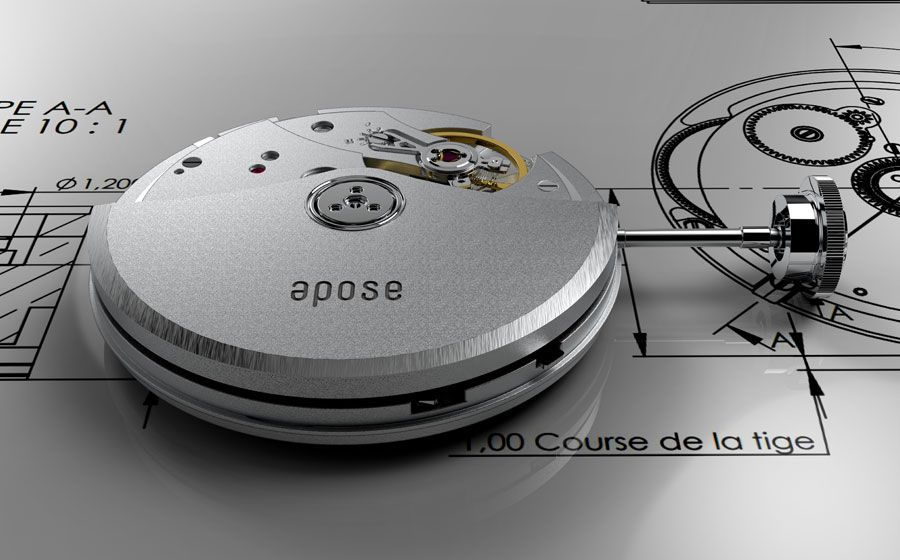
An automatic watch is a marvel of mechanical craftsmanship. It operates without a battery thanks to a rotor, an oscillating mass that turns with the natural movements of the wrist. This rotor continuously winds a mainspring, known as the barrel, which stores the energy needed to power the movement.
This technology makes the automatic watch a living object — as long as it is worn, it recharges itself naturally.
Precision and Maintenance
An automatic watch may not achieve the absolute precision of quartz, but its charm lies elsewhere — in the art of adjustment and the beauty of mechanical balance. Regular servicing (every four to five years) ensures longevity. More than an instrument, it becomes a companion for life, an object meant to be passed down.
Understanding How a Quartz Watch Works
Battery-Powered Movement
A quartz watch operates thanks to a quartz crystal that vibrates at a constant frequency under the effect of an electric current supplied by a battery. Introduced in the 1970s, this technology revolutionized watchmaking, enabling the production of highly accurate, affordable timepieces.
Simplicity and Low Cost
Quartz watches stand out for their daily precision (a variation of only a few seconds per month) and minimal maintenance (battery replacement every 2–3 years). They are accessible, reliable, and ideal for those seeking simplicity above all.
Advantages and Drawbacks of Each Technology
Durability and Prestige of the Automatic
The automatic watch captivates with its mechanical nobility. Each piece is the result of traditional watchmaking savoir-faire.
Advantages:
No battery replacement required
Built to last
Prestige associated with fine watchmaking
Drawbacks:
Higher cost
Requires regular servicing
Reliability and Accessibility of Quartz
The quartz watch appeals through its unmatched accuracy and affordability.
Advantages:
Outstanding precision
Effortless use
Lower price
Drawbacks:
Less emotional connection
Battery dependency
Why Apose Chooses the Automatic
At Apose, we have chosen the path of the automatic. Because our watches are designed as exceptional objects — alive, meaningful, and emotional. A high-end French watch is not merely a tool to tell time; it embodies craftsmanship, timeless elegance, and a vision of time itself.
That is why we favour mechanical movements over quartz — for in their apparent simplicity lies the true beauty of complication.


Comments